Why Your Pressed Flowers Turn Brown (and How to Keep Their Colour)
You press a handful of flowers, wait a few weeks, open the press, and the bright blue cornflower has gone a sad greyish brown. It is the most common disappointment in flower pressing, and it puts a lot of people off before they have really started. The good news is that fading is not bad luck. It comes down to a few things you can control, and once you know them, your pressed flowers hold their colour for years.
Colour is lost in two ways: moisture and light. A flower that dries too slowly, or sits in the sun afterwards, gives up its pigment. Almost everything below is really about drying flowers fast and then keeping them out of strong light.
Some colours hold, some fight you
Before you blame your technique, know that some flowers simply keep their colour better than others. Blues, purples, and strong yellows are the most reliable. Cornflowers, larkspur, pansies, violets, and buttercups come out almost as bright as they went in. Pinks usually hold well too. The tricky ones are reds and whites. Deep red roses often darken to burgundy or brown, and white flowers can turn cream or see-through. You can still press them, just expect a shift, and lean on the blues and yellows when you want colour that really lasts.

Press them dry, and press them fast
Most browning starts with moisture. Pick your flowers in late morning, once the dew has dried, and choose blooms that are just open rather than past their best. Then press them the same day. The longer a flower sits in a warm room, the more colour it loses before it even reaches the paper. Lay each one flat on the blotting paper with a little space around it, so air and pressure reach the whole bloom evenly.

Change the paper early: for the first three or four days, swap the damp blotting paper for dry sheets every day or two. This is the single biggest thing you can do for colour. The faster a flower dries, the less time it has to brown, and thick blooms like roses need it most.
Which means you need more dry blotting paper than most people start with. Two sheets is enough for one change. Running out on day two, and putting a damp sheet back in, is how a good batch turns brown.

Keep spares
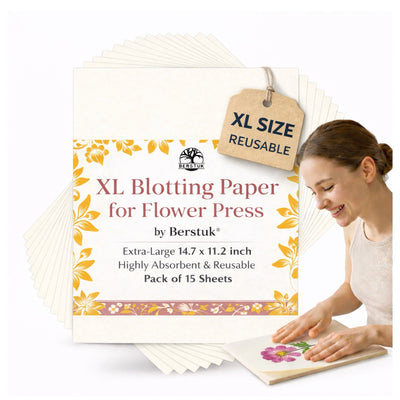
XL Blotting Paper Refill, 14.7" x 11.2"
Big enough to cut down to fit any press you own. Enough dry sheets that you never have to reuse a damp one on day two.
$15.00
Keep them out of the light
Once your flowers are dry, light becomes the enemy. The same sunlight that fades a curtain fades a pressed flower, only faster. If you frame them, hang the frame on a wall that does not catch direct sun, or use glass that blocks UV. Cards and journals are easy, because they live closed in the dark. A pressed flower kept out of strong light holds its colour for years rather than months.

From the Berstuk pressing club
Get 10% off your first order, plus the pressing tips we only share with members
Paper timings, colour rescues, and the mistakes that cost people a whole batch. One email a week at most, and you can leave whenever you like.
A good press does half the work
Even pressure and the right paper matter more than people expect. A heavy book presses the middle of a flower and misses the edges, so parts stay damp and brown while others flatten. A proper press holds the whole bloom evenly while the blotting paper draws the moisture out steadily.


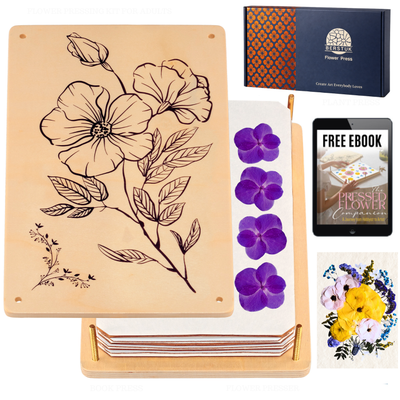
The one in these photos
Tilly & Tansy, Miniature Flower Press Twins
A set of two, with the cards and absorbent paper in the box. Even pressure edge to edge, so flowers dry flat and fast, which is exactly what keeps the colour.
$25.00
Frequently asked questions
Which flowers keep their colour best?
Blues, purples and strong yellows. Cornflowers, larkspur, pansies, violets and buttercups are the most reliable. Pinks usually hold well too.
Why did my white flowers go see-through?
White petals show moisture damage more than any other colour. Press them the same day they are picked and change the paper daily for the first few days.
Can I bring the colour back once a flower has browned?
No. Browning is the pigment breaking down, and it does not reverse. The fix is always prevention: dry flowers, dry paper, changed often.
How often should I change the blotting paper?
Every day or two for the first three or four days, then every few days, then weekly. The first 24 hours matter most.
Will they fade in a frame?
Only in strong light. Hang the frame away from direct sun, or use UV blocking glass, and they will hold their colour for years.
None of this is hard. Pick dry flowers, dry them quickly, change the paper, and keep them out of the sun. Do that and the blue stays blue and the yellow stays yellow, long after the garden has moved on. Press a few this week and check them in a month. Bright, flat, and still full of colour is a lovely thing to open.
Questions? We're always happy to help at info@berstukstore.com