How to Press Big, Thick Flowers Without the Soggy Middle
Roses, peonies, dahlias, sunflowers. The flowers we love most in summer are often the hardest ones to press. You lay a fat garden rose in the press, tighten it down, and open it a few weeks later to find the outer petals thin as paper but the middle still damp, brown, and sometimes gone mouldy. It is the soggy middle, and it puts a lot of people off pressing their favourite blooms. The fix is not a secret. Thick flowers just need a little prep and a press that can hold them properly.
Why big flowers fight back
A thin flower like a pansy or a cosmos dries in days because there is barely anything to it. A rose or a dahlia is a tight ball of overlapping petals wrapped around a dense, wet centre. Pressure flattens the outside first and seals the moisture in, so the core sits there slowly browning while the edges are already done. The two things that beat it are airflow and even pressure, and both of them start before the flower ever goes in the press.

Start with firm blooms just as they open, before they blow wide.
Choose the right blooms and the right moment
Pick your big flowers just as they open, not at full blowsy peak. A rose that is two thirds open presses far better than one that has already thrown its petals wide. Choose blooms that feel firm rather than soft, pick them in late morning once the dew has dried, and press them the same day. The fresher and drier they go in, the less water there is to trap. Skip anything bruised, because a mark that looks small now will spread and darken as the flower dries.
From the Berstuk pressing club
Get 10% off your first order, plus the pressing tips we only share with members
Paper timings, colour rescues, and the mistakes that cost people a whole batch. One email a week at most, and you can leave whenever you like.
Flatten the bulk before you press
This is the step most people skip, and it is the one that matters most. For a thick flower you have three good options. Snip the hard green base at the back so the bloom can open out and lie flatter. For a very deep flower like a rose or a peony, slice it cleanly in half from top to stem with a sharp knife and press the two halves face down, which gives you a lovely side profile and half the depth to dry. And for the fullest blooms of all, take them apart and press the petals separately, then rebuild the flower on the page later. Our guide to pressing a rose petal by petal walks through that method if you want it.

Lay each bloom face down with room to spread.
Change the paper often: thick flowers hold the most water, so swap the damp blotting paper for dry sheets every day for the first week. This one habit is what stops the middle turning brown. If a bloom still feels cool or soft, moisture is trapped, so keep going until it feels dry and papery all the way through.
Every day for a week is six or seven changes for a single batch, which catches people out. Have more dry blotting paper than you think you need, because putting a damp sheet back in on day three undoes the whole point.

You will need more than you think
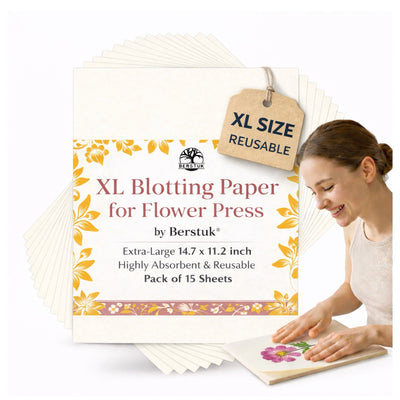
XL Blotting Paper Refill, 14.7" x 11.2"
Big enough to cut down to fit any press you own. Thick blooms need a daily change for the first week, so keep plenty of dry sheets on hand.
$15.00
Give them room, depth, and firm pressure
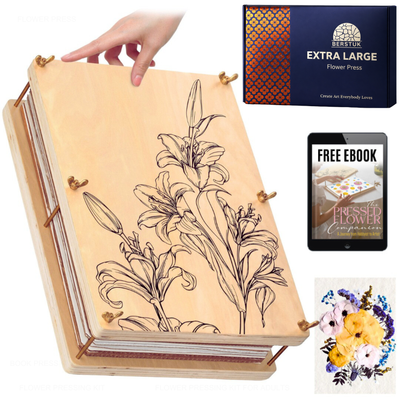
A big bloom needs space around it and steady weight across the whole flower, which is exactly where a book or a small press struggles. The pages bow around a thick centre and squeeze the edges harder than the middle, so it dries unevenly. A large press with a wide flat board and screws at every corner holds even pressure over the whole flower, and there is room to spread a rose or a dahlia out fully rather than cramming it in.

Room and even pressure across the whole bloom, not just the edges.

Built for these blooms
Lilabelle, Extra Large Flower Press
A wide flat board with screws at every corner, so pressure lands evenly across a whole rose or dahlia instead of bowing around the middle. Big absorbent sheets included.
$59.99
Frequently asked questions
Why is the middle of my pressed rose still brown and damp?
Pressure flattened the outside first and sealed the moisture in. Halve the bloom or press it petal by petal next time, and change the paper daily for the first week.
Can I press a whole rose without cutting it?
Sometimes, if it is small and only two thirds open. For anything full, halving it or taking it apart gives a far better result.
How long do thick flowers take?
Three to four weeks, sometimes longer. They are ready when they feel papery all the way through and are no longer cool to the touch.
Can I speed it up with a hairdryer or an iron?
Not on a thick bloom. Heat dries the outside faster while the centre stays wet, which is the exact problem you are trying to avoid.
Will a book work for a peony?
Poorly. The pages bow around the centre, so the edges get crushed and the middle stays damp. This is the one case where a proper press really does change the outcome. There is more in pressing flowers in a book.
None of this is difficult. Pick firm, fresh blooms, trim or halve the thick ones, give them room, and change the paper while they dry. Do that and the rose you thought was too big to save comes out flat, whole, and still lovely months later. Try one of your favourites this week. Opening the press to find a fat garden rose dried all the way through is a small, real thrill.

Thick or thin, pressed flat and kept for good.
Questions? We're always happy to help at info@berstukstore.com